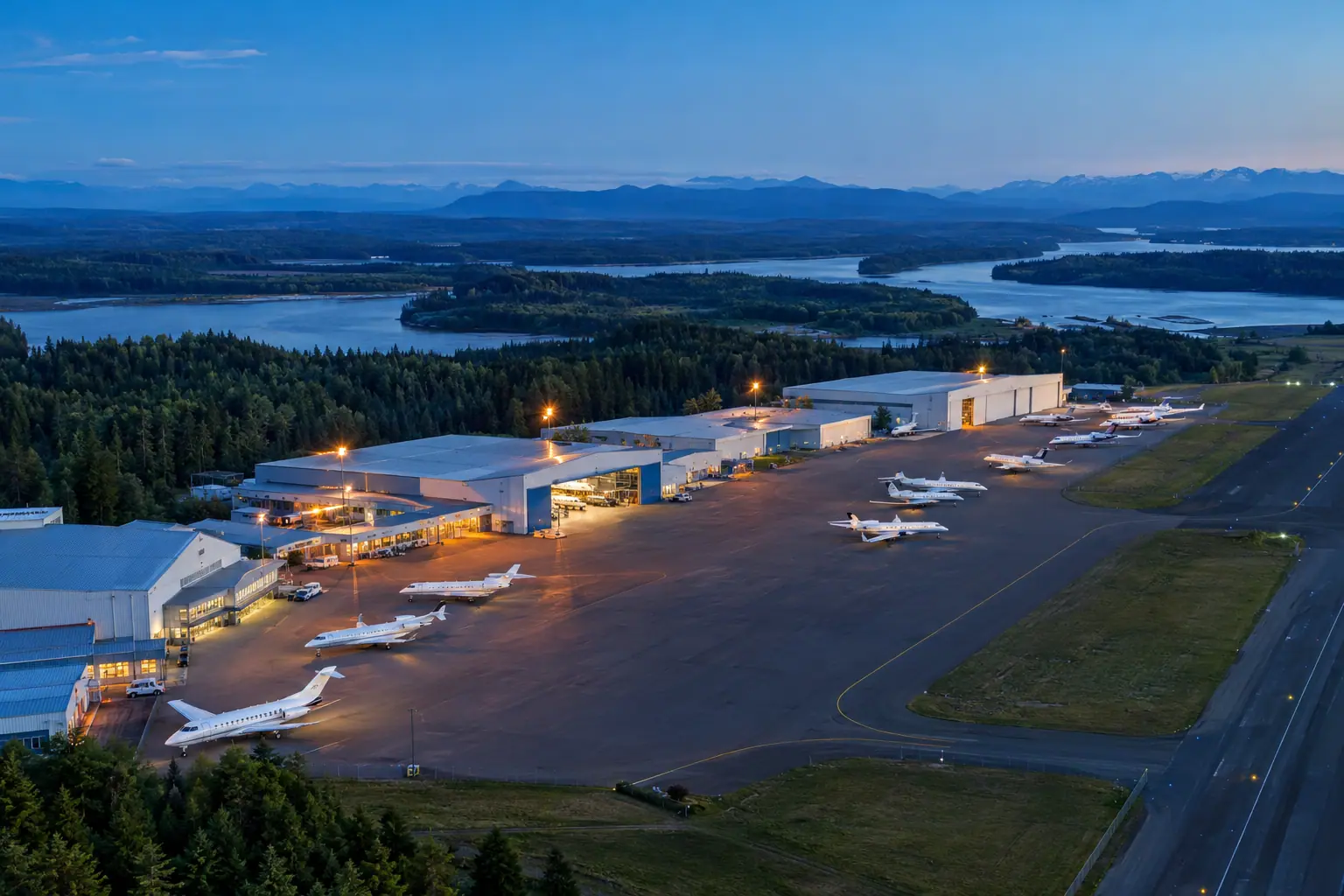
Private Jet Pricing Nashville
Nashville charter quotes track aircraft type, not the airport. BNA's 11,030-foot longest runway takes any jet you can book. Here is what the numbers look like before you call.
- KBNA · BNAfield IDs
- 599 ftfield elevation
- 11,030 ftlongest runway
- 0 mito New York
Private jet pricing Nashville starts with the aircraft class, not the airport. Light jets run roughly $4,500 an hour, midsize $6,800, and super-midsize $9,500; every quote you get from a broker is an estimate built from those hourly bands plus crew, fuel and landing fees. The city sits 1,585 miles from the Strip, so a one-way Nashville-to-Las Vegas leg lands in the $18,000 to $27,000 range depending on the cabin. Ask for the itemized version.
Nashville International Airport sits at 599 feet, and the longest runway measures 11,030 feet. That matters more than the passenger terminal for charter: the runway can handle a transcontinental departure even on a hot July afternoon when density altitude climbs. The FAA Part 135 operator flying you holds operational control of the flight; your broker arranges it as an agent under DOT Part 295 rules. Those are two different companies, and good brokers say so up front.
Charter flights, empty legs and shared seats are three different products with three different price points. A full charter prices the whole aircraft; an empty leg prices a repositioning flight that already exists, often at a fraction of the one-way cost. Seat-by-seat products put you on someone else's schedule. When comparing Nashville jet quotes, make sure you are comparing the same product, the same aircraft type and the same passenger count. Otherwise the numbers do not line up.
Runways and field performance at BNA
Nashville International has one runway over 11,000 feet, and that changes your aircraft options. The 11,030-foot strip at 599 feet elevation means a heavy or long-range jet can depart with full fuel in most conditions. Summer is the catch: peak density altitude at 115F reaches 3,300 feet, so a lightly powered turboprop or a small jet on a hot day may face a weight restriction. Pilots plan for that. If your trip is long and your window is a July afternoon, then a larger cabin with better hot-and-high performance is the safer quote.
| Runway | Miles | Width | Surface |
|---|---|---|---|
| 13/31 | 11,030 ft | 150 ft | Asphalt |
| 02C/20C | 8,001 ft | 150 ft | Concrete |
| 02R/20L | 8,001 ft | 150 ft | Concrete |
| 02L/20R | 7,704 ft | 150 ft | Concrete |
FBOs and ground handling
Four FBOs serve BNA: Atlantic Aviation, Azure Flight Support, Contour Flight Support and Signature Aviation. Which one your flight uses depends on the operator's contract, not your preference, but you can ask the broker when you book.
Ground handling is a real line item in Nashville charter costs, and it varies by FBO. Fees for ramp, lounge and handling get passed through; on a light jet they can be a noticeable share of a short leg. Ask for them separately. A broker quoting $4,500 an hour that hides $600 in handling is not cheaper than the one quoting $5,000 with everything included.
What Nashville charter is best for
- Nonstop transcontinental legs from an 11,030-foot runway, including heavy jets to the West Coast
- Music industry and business travel where the schedule is set days out, not weeks
- Empty-leg hunting on repositioning flights, which price well below a standard one-way
- Group trips where a midsize or super-midsize cabin beats four first-class seats
| Class | Runway length needed | Here |
|---|---|---|
| Turboprop | 3,300 ft+ | Clears |
| Light jet | 4,000 ft+ | Clears |
| Midsize jet | 5,000 ft+ | Clears |
| Super-midsize jet | 5,200 ft+ | Clears |
| Heavy jet | 5,600 ft+ | Clears |
Weather and density altitude by season
July is the hardest month at BNA: 89F average high, 17 wet days and density altitude around 2,700 feet. August is close behind at 87F and 2,600 feet. That affects performance, not comfort. On a hot afternoon, a small jet may need a fuel stop on a long leg where the same aircraft flies nonstop in January at near-sea-level density altitude.
Winter is the easy season for performance and the harder one for weather delays. January highs average 48F with 11 wet days, and density altitude sits at field elevation. If you are flying Nashville to Teterboro in February, then plan for de-icing time and the occasional ground stop. The pricing is the same; the schedule is what moves.
| Mo. | Avg high | Wet days | Air density height |
|---|---|---|---|
| Jan | 48°F | 11 | 0 ft |
| Feb | 53°F | 13 | 300 ft |
| Mar | 61°F | 13 | 900 ft |
| Apr | 69°F | 12 | 1,400 ft |
| May | 79°F | 13 | 2,100 ft |
| Jun | 86°F | 14 | 2,500 ft |
| Jul | 89°F | 17 | 2,700 ft |
| Aug | 87°F | 15 | 2,600 ft |
| Sep | 83°F | 9 | 2,300 ft |
| Oct | 73°F | 9 | 1,700 ft |
| Nov | 60°F | 9 | 800 ft |
| Dec | 53°F | 11 | 300 ft |
Getting to and from the airport
BNA sits about 8 miles east of downtown Nashville, a drive that runs 15 to 25 minutes outside rush hour. The FBOs are separate from the commercial terminal, so you do not need to enter the main building. Your driver goes to the FBO address the operator gives you. If you are flying an international leg, then CBP clearance is arranged in advance and adds time to the arrival plan. Domestic travelers clear TSA at the FBO or not at all, depending on the facility.
Private jet routes via Nashville
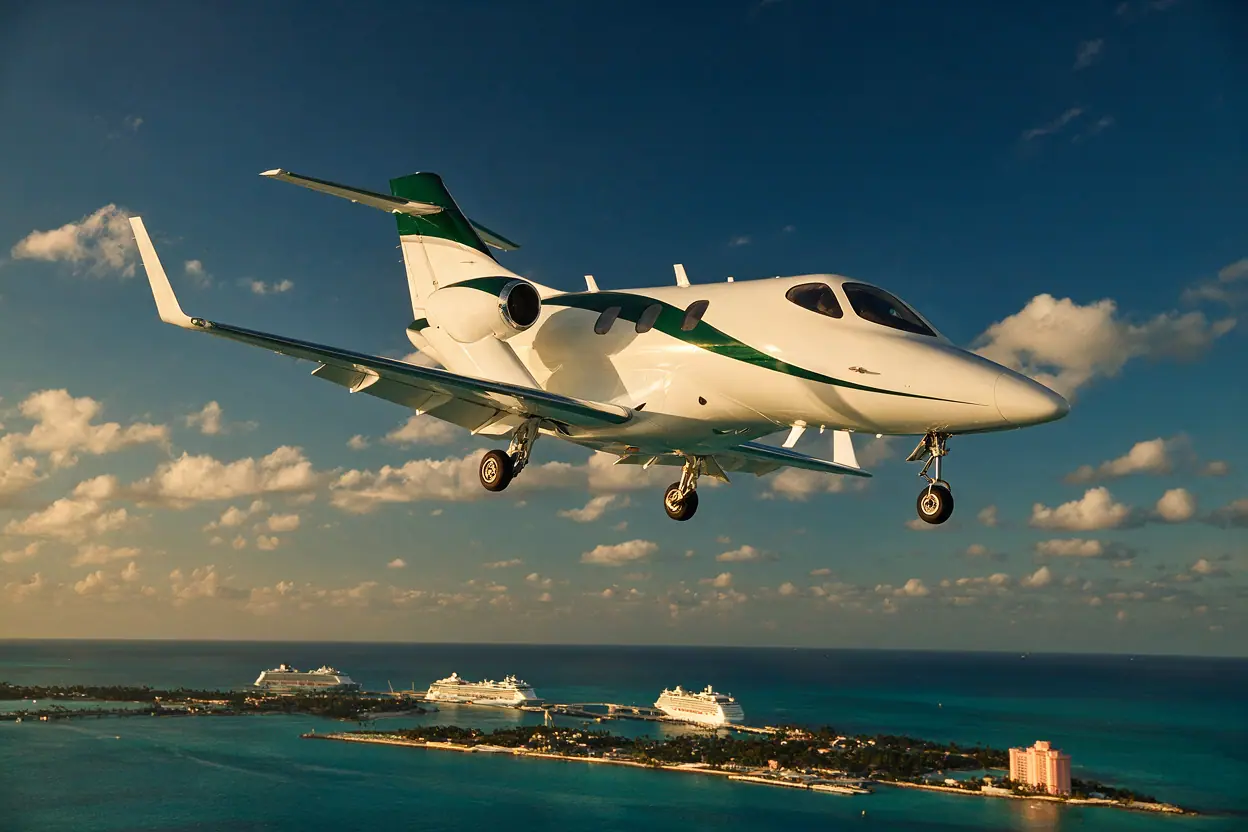
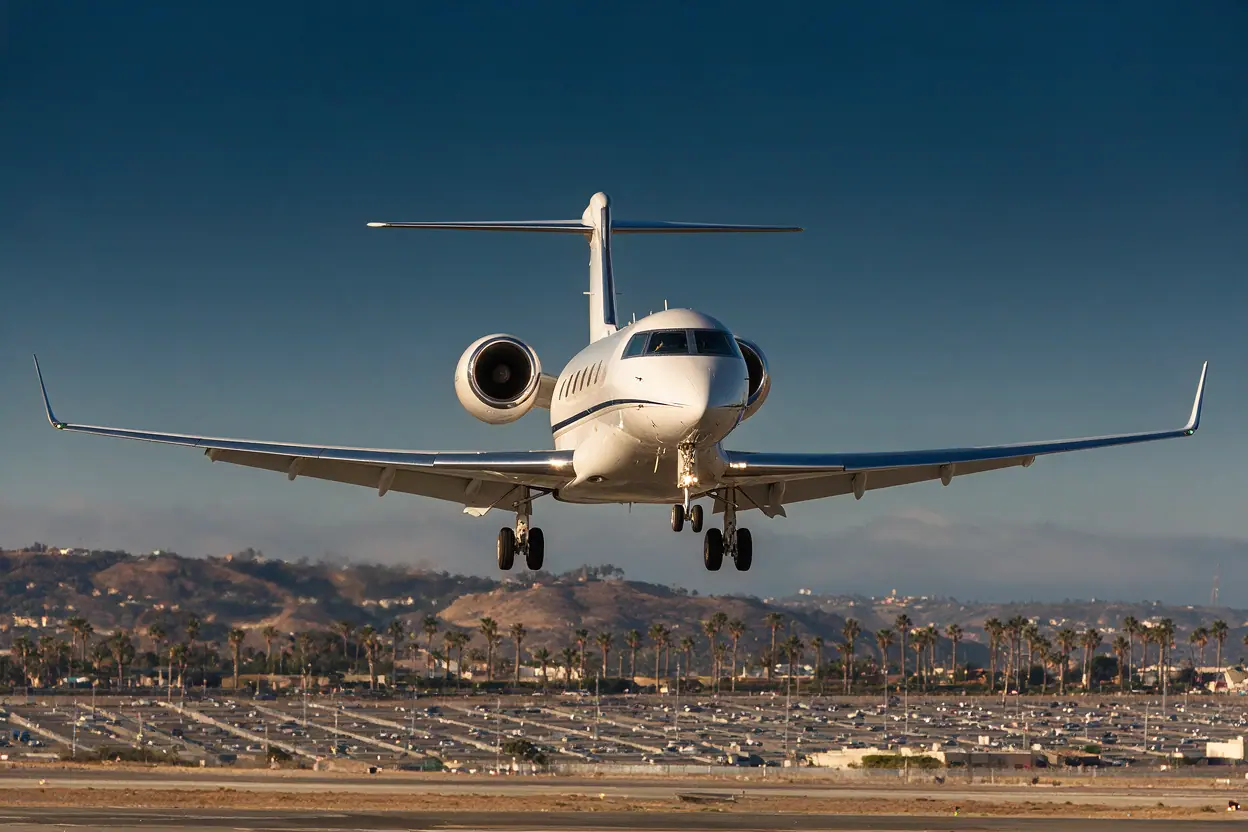
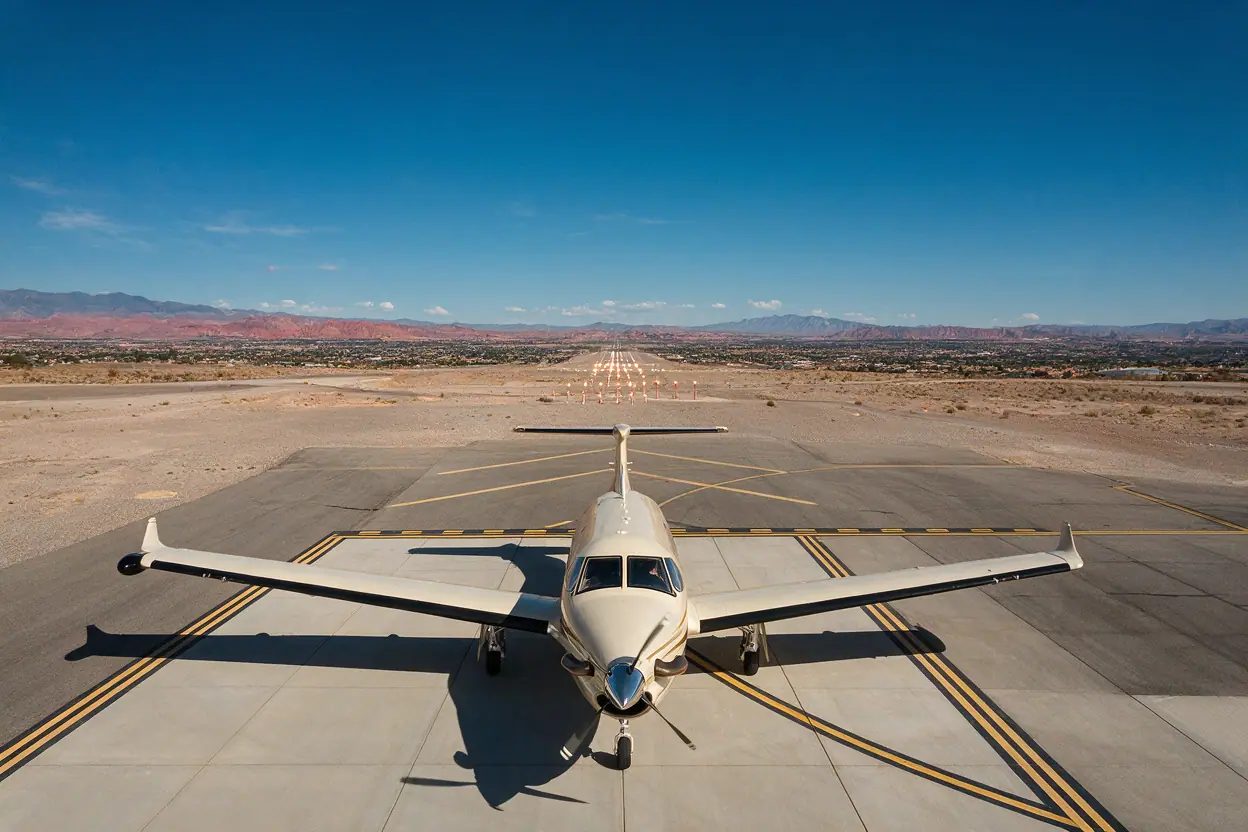
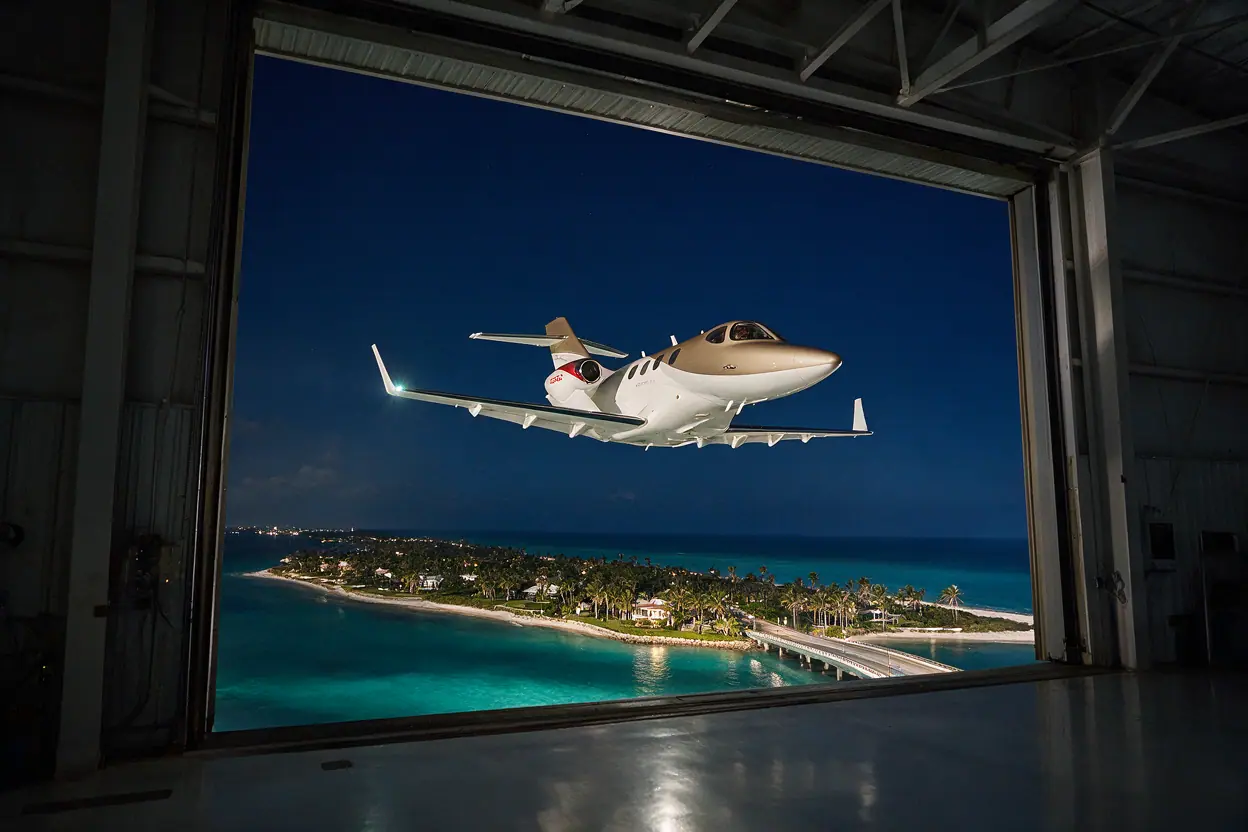
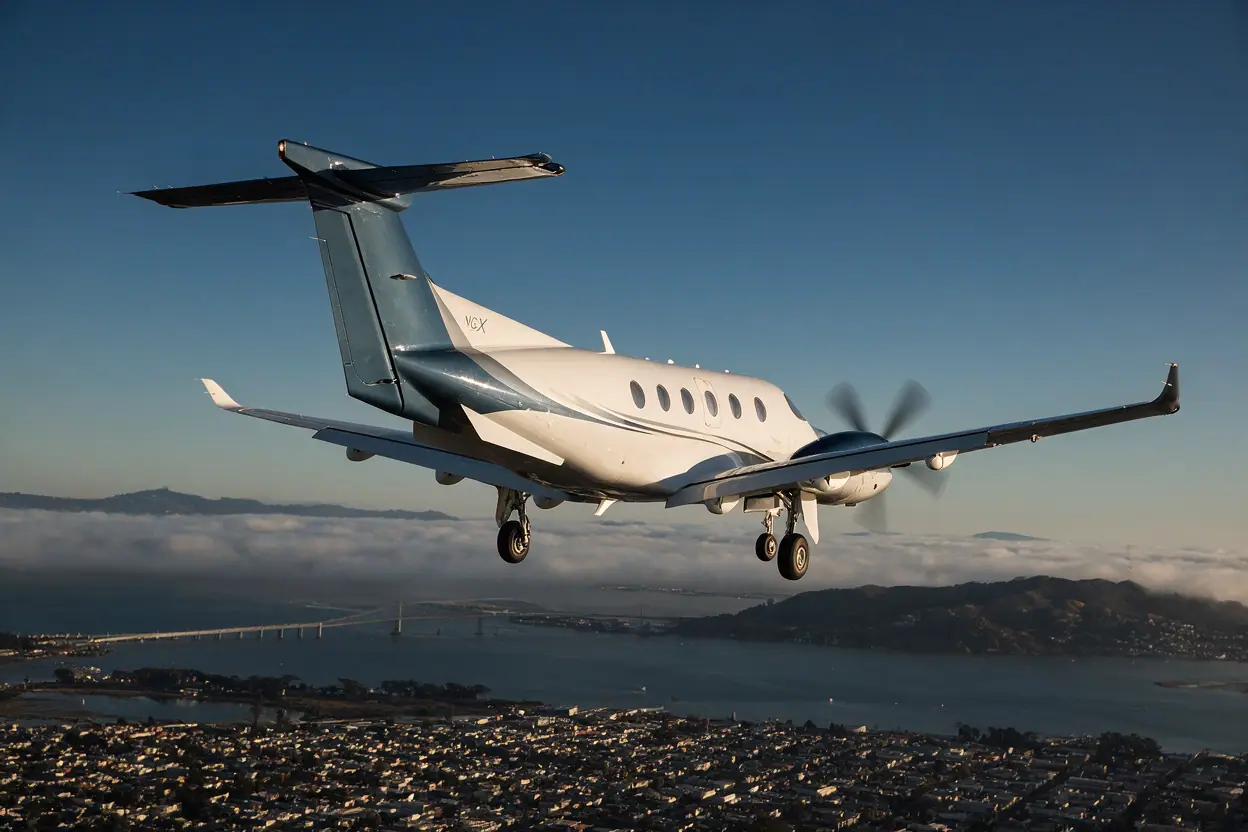
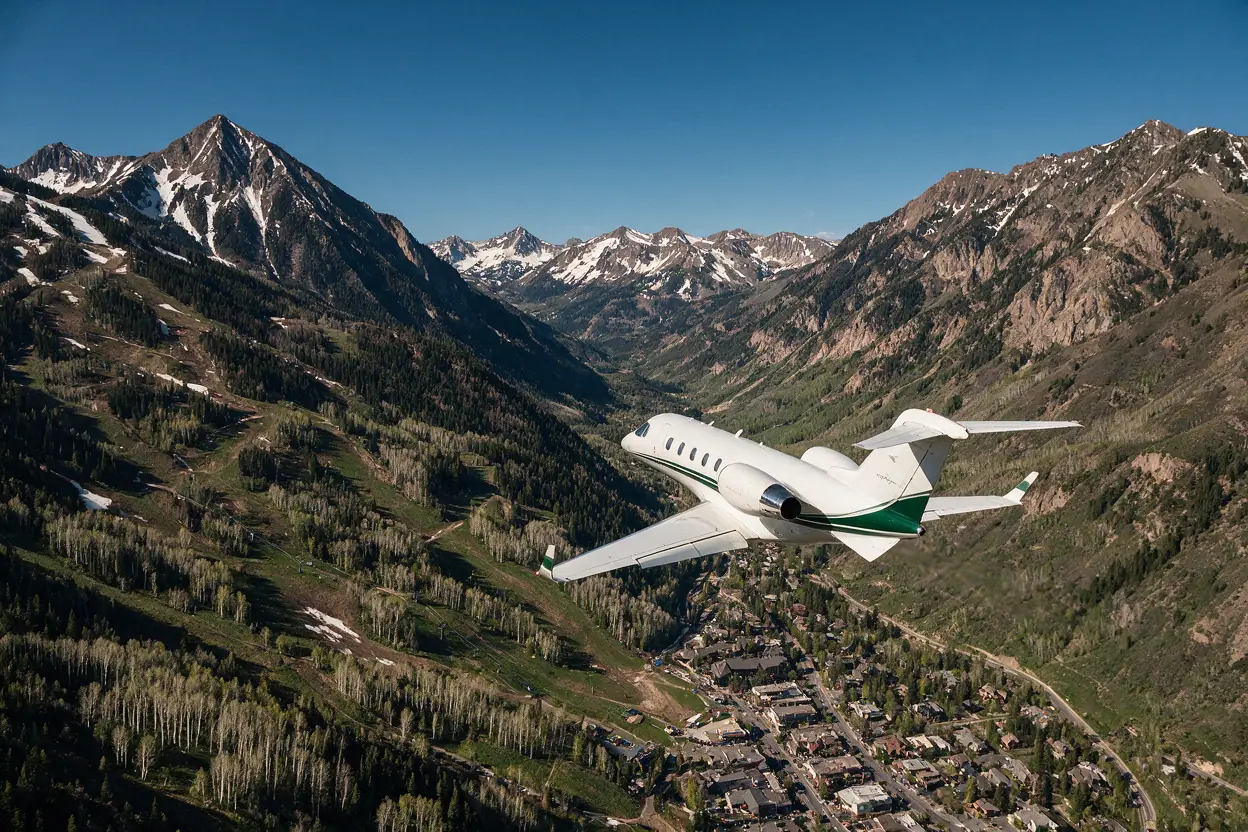
These 6 private jet legs span 199 to 2,129 nautical miles; single-leg light jet quotes run from $4,000 to $36,000.
Airport-specific questions
How much does private jet pricing Nashville run per hour?
Roughly $4,500 an hour for a light jet, $6,800 for midsize and $9,500 for super-midsize, as estimates. Those bands cover crew, fuel and standard operating costs. Landing fees and handling at BNA come on top and vary by FBO. A three-hour leg in a midsize lands near $20,000 before taxes. Treat every number as an estimate until an operator confirms it in writing.
Can a private jet fly nonstop from Nashville to the West Coast?
Yes. BNA's 11,030-foot runway at 599 feet elevation supports nonstop transcontinental departures in most jets, including midsize cabins. The limit is summer heat. At a peak density altitude of 3,300 feet, a smaller jet may need a fuel stop on the longest legs. A super-midsize or heavy jet removes that concern for the 1,585-mile run to Las Vegas.
What is an empty leg and how much can it save out of Nashville?
An empty leg is a repositioning flight an operator must fly anyway, sold to fill the cabin. Savings vary widely because the price depends on the route and how close the departure is. A one-way that would price in the five figures can sell for a fraction of that. The catch is timing: empty legs are fixed, nonrefundable and often posted days out.
How many FBOs are at Nashville International Airport?
Four: Atlantic Aviation, Azure Flight Support, Contour Flight Support and Signature Aviation. Which one handles your flight depends on the operator's contract. Ask when you book so your driver goes to the right address. The FBOs are separate from the commercial terminal, so you skip the main ticketing hall entirely on a domestic departure.
Who operates the aircraft and who arranges the flight?
Two different companies, usually. The FAA Part 135 operator holds operational control and is responsible for the crew, maintenance and dispatch. The broker arranges the flight as an agent under DOT Part 295 and does not own the aircraft. Ask for the operator's name and certificate number before you pay a deposit. A broker who will not name the operator is a broker to skip.
When is the best time of year for a hot-and-high departure from BNA?
Morning. July density altitude reaches about 2,700 feet and the 115F peak hits 3,300 feet, but early departures are cooler and performance improves. If your trip is long and your aircraft is small, then a 7 a.m. slot in July can mean the difference between nonstop and a fuel stop. Winter departures see density altitude at field elevation and no restriction.