Private jet cost
Private jet cost depends on aircraft class, flight time and airport fees, so quotes vary widely. Light jets start around $3,800 an hour; turboprops around $2,200. This page breaks down real numbers so you can compare charter quotes with confidence.

Seasonality and booking windows
Private jet cost responds to seasonal demand. The monthly data shows 13 wet days in July and 12 in April, which means weather delays are possible in many months. Winter holidays and summer weekends are the busiest. If you can move your trip by a day or two, you can often find better availability and lower prices. Turboprops and light jets are the first to book up, so start early if you need a specific class.
A super-midsize jet at $7,200 an hour may be the only option for a long transcontinental leg during a peak week. For shorter routes, flexibility on airports and times keeps private jet cost closer to the low end. Ask your broker about repositioning or empty legs if your schedule is open; those can reduce the price, but availability is limited.

Route examples and private jet cost
On short routes, private jet cost is dominated by minimum hourly charges and airport fees. Los Angeles to San Francisco is 279 nautical miles and 59 minutes, estimated at $4,000 to $6,000 in a light jet. Dallas to Houston is 208 nautical miles and 48 minutes, also $4,000 to $6,000. New York to Boston is 158 nautical miles and 41 minutes, same range. A New York to Miami light jet flight is 949 nautical miles and 2 hours 37 minutes, priced at $10,000 to $15,000. For longer trips, New York to Los Angeles is 2,129 nautical miles and 6 hours 15 minutes, $23,500 to $36,000. Chicago to Miami is 1,023 nautical miles and 2 hours 48 minutes, $10,500 to $16,000. All prices are estimates and depend on aircraft availability and date.
Miami to Nassau at 161 nautical miles is a 42-minute flight to the Bahamas from $4,000 to $6,000. International legs require CBP clearance, and your broker should confirm passport and customs arrangements. Routes like these show how distance and class interact: a longer flight in a midsize jet can cost more than a shorter one in a light jet, but the reverse happens when short hops hit minimums.
- New York → Miami2h 37m
- New York → Los Angeles6h 15m
- Los Angeles → Las Vegas0h 47m
- New York → Palm Beach2h 30m
- Los Angeles → San Francisco0h 59m
- New York → Aspen4h 43m
- Los Angeles → Aspen1h 51m
- New York → The Hamptons0h 30m
- Chicago → New York1h 49m
- Dallas → Houston0h 48m
- Miami → Nassau0h 42m
- New York → Boston0h 41m
- Washington, DC → New York0h 46m
- Los Angeles → Cabo San Lucas2h 16m
- Dallas → Las Vegas2h 34m
- Chicago → Miami2h 48m

Fleet choices and trip cost
Five classes cover most US charter demand: turboprops (6-8 passengers, 1,500 nautical miles), light jets (4-7 passengers, 1,400 nautical miles), midsize jets (7-9 passengers, 2,100 nautical miles), super-midsize jets (8-10 passengers, 3,200 nautical miles), and heavy jets (10-14 passengers, 4,000 nautical miles). A light jet at $3,800 an hour suits four to seven passengers on trips under 1,400 nautical miles. If your party is larger or your route longer, moving up a class raises the hourly rate but can cut the number of fuel stops.
Super-midsize jets at $7,200 an hour carry eight to ten passengers and fly 3,200 nautical miles nonstop, which covers transcontinental routes like New York to Los Angeles. Heavy jets at $9,500 to $14,500 an hour carry 10 to 14. For a family of four on a 200-nautical-mile hop, a turboprop or light jet keeps private jet cost at the low end.
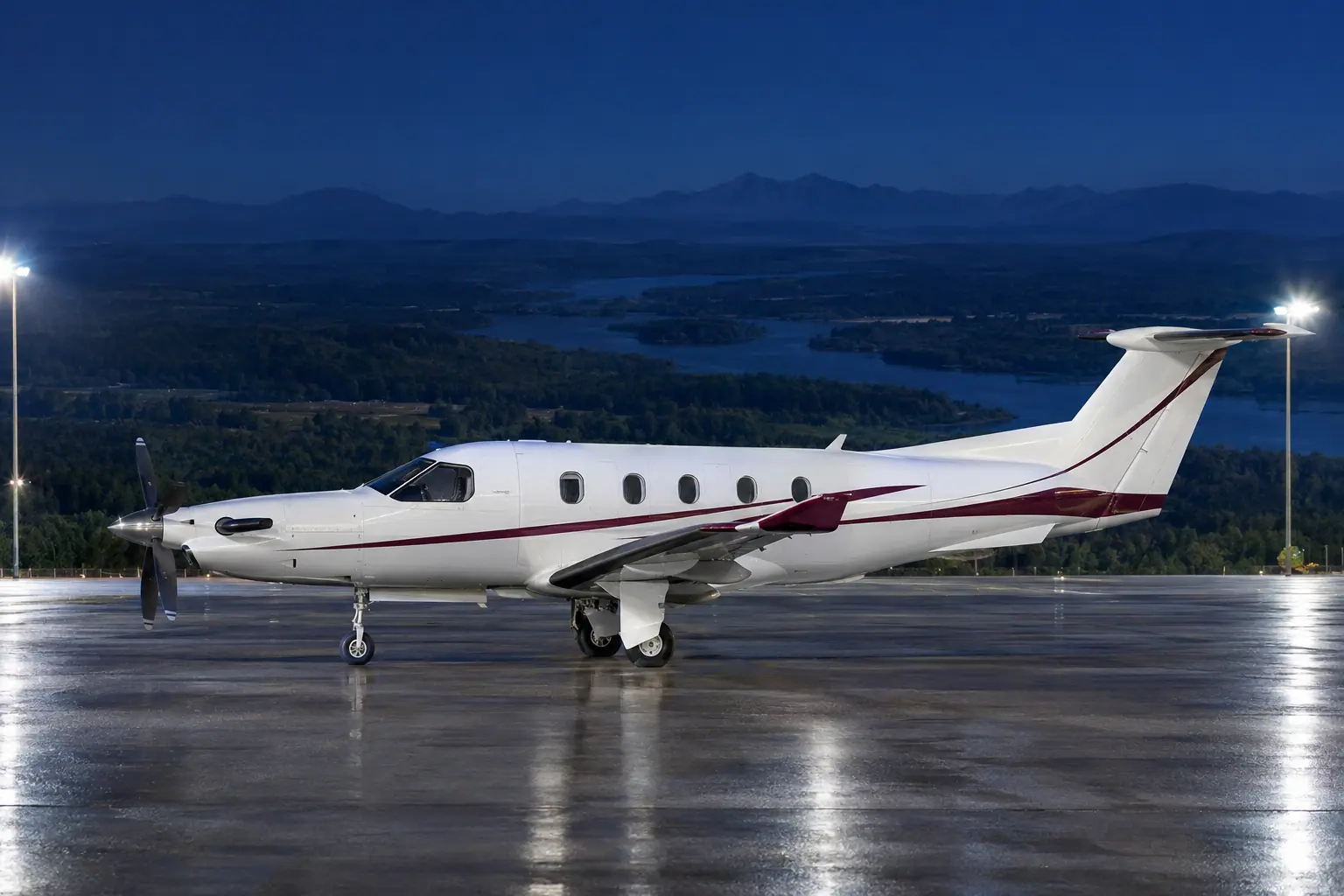
Turboprop
- 6-8 seats
- 300 kt cruise
- 1,500 nm range
Pilatus PC-12 NGX, Daher TBM 960
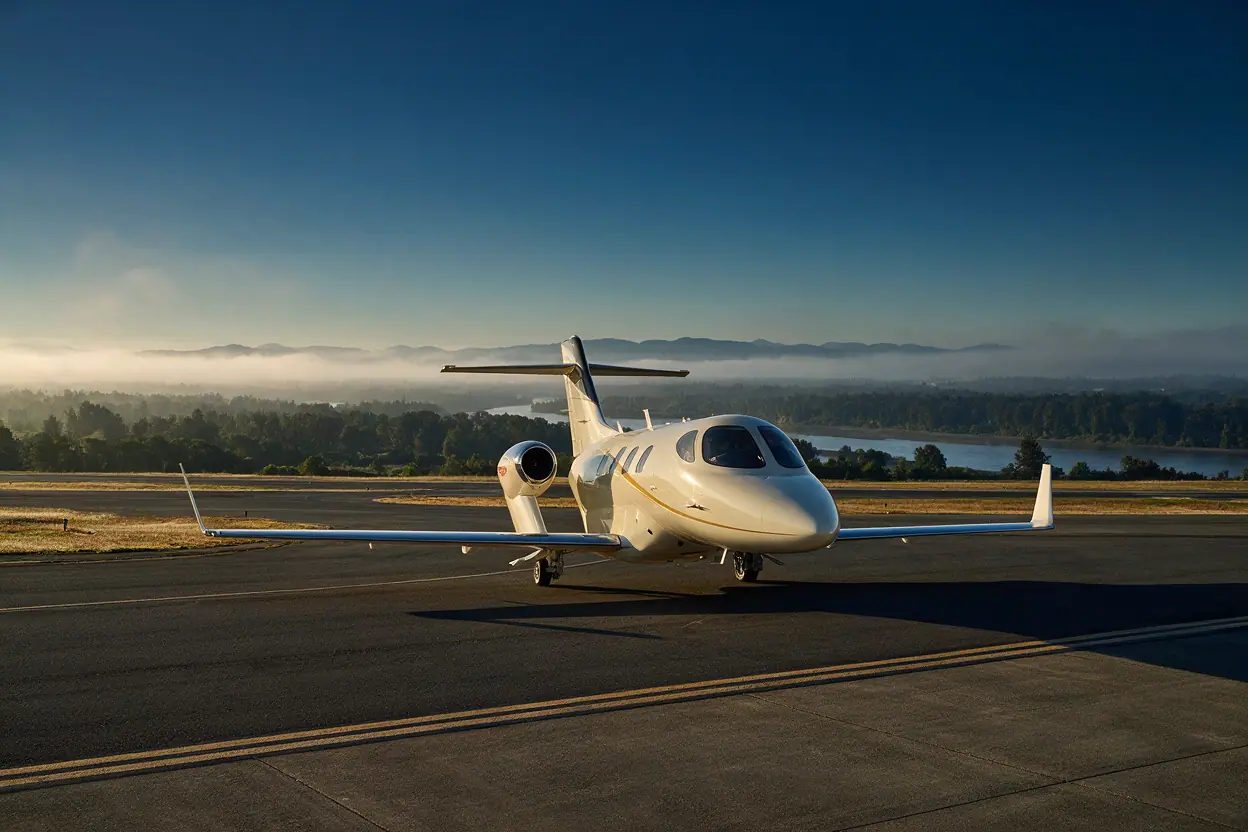
Light jet
- 4-7 seats
- 430 kt cruise
- 1,400 nm range
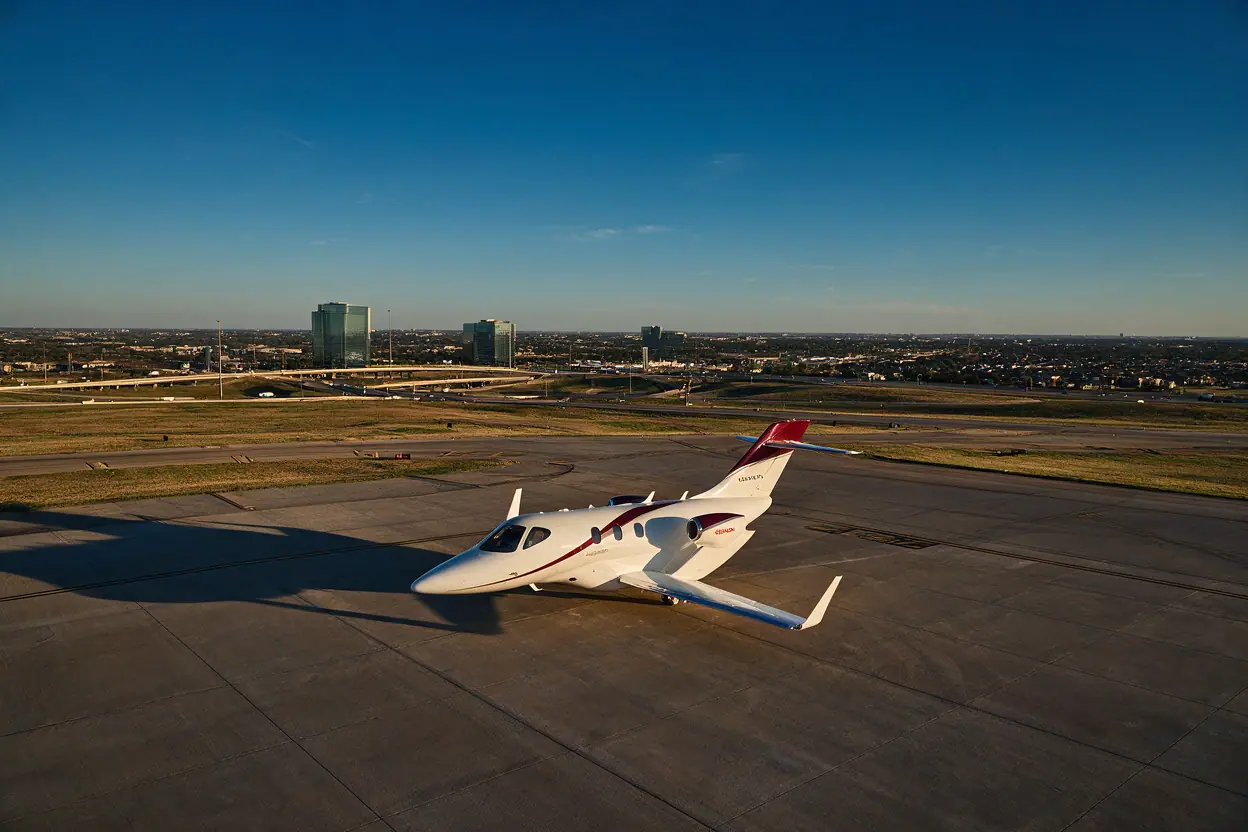
HondaJet Elite II, Cessna Citation CJ4 Gen2
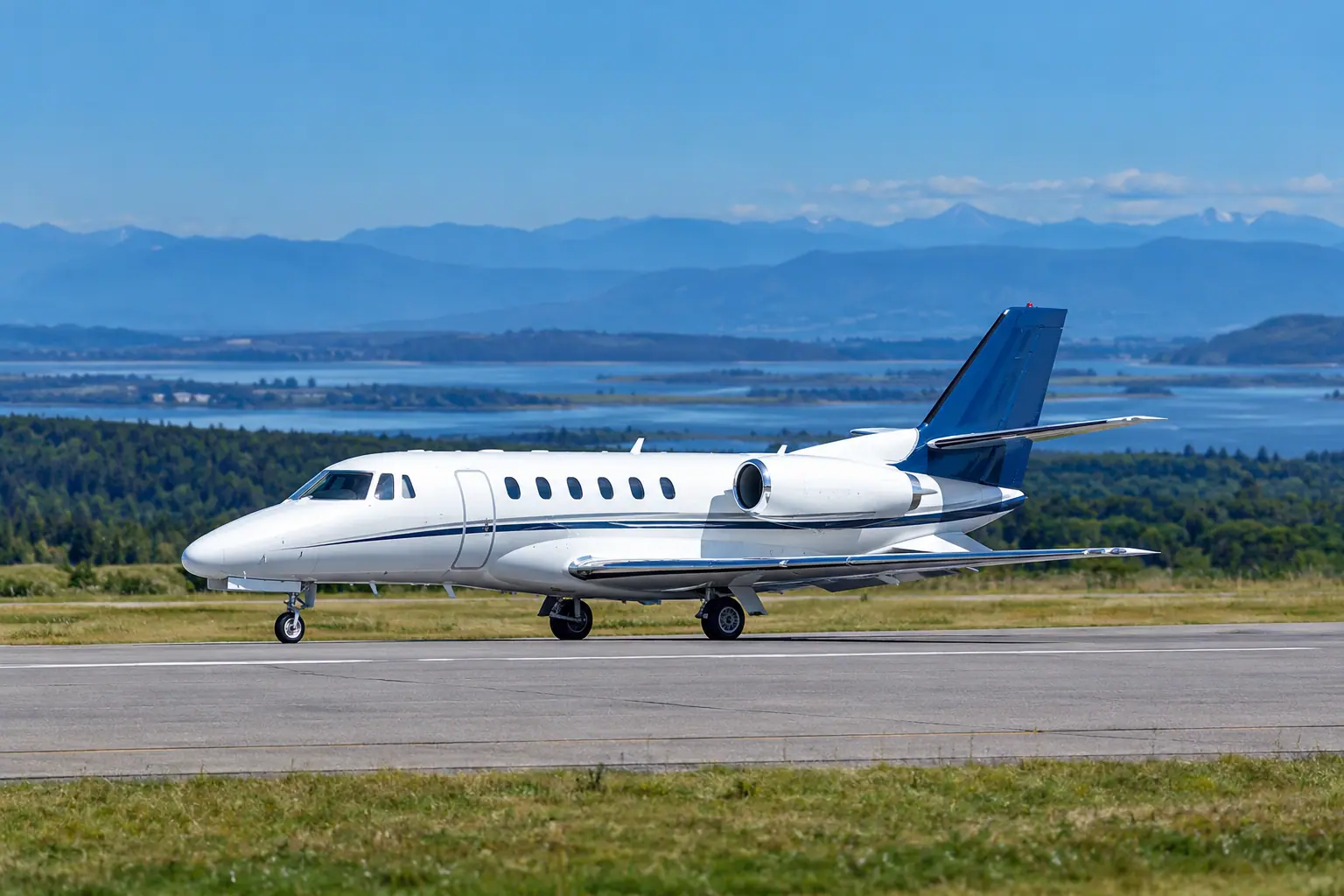
Midsize jet
- 7-9 seats
- 440 kt cruise
- 2,100 nm range
Cessna Citation XLS+, Cessna Citation Latitude
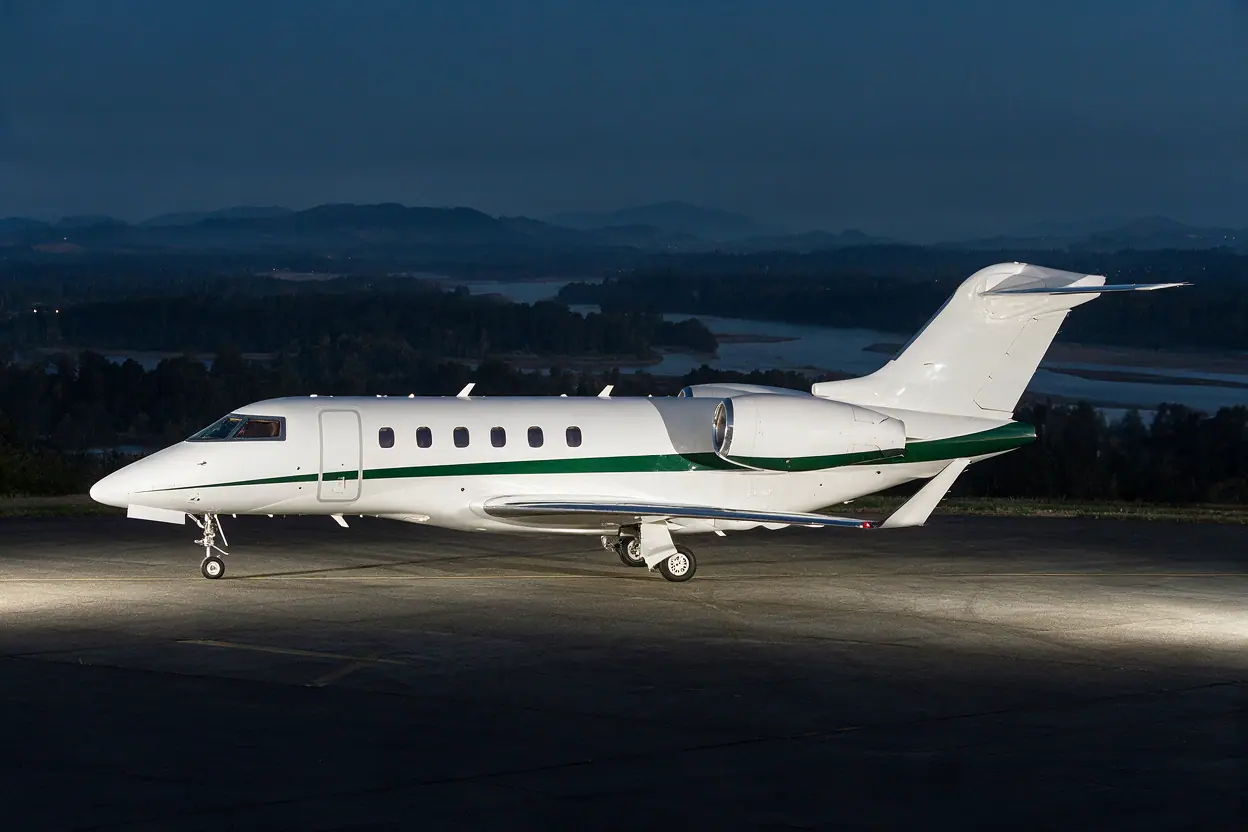
Super-midsize jet
- 8-10 seats
- 470 kt cruise
- 3,200 nm range
Cessna Citation X+, Bombardier Challenger 350
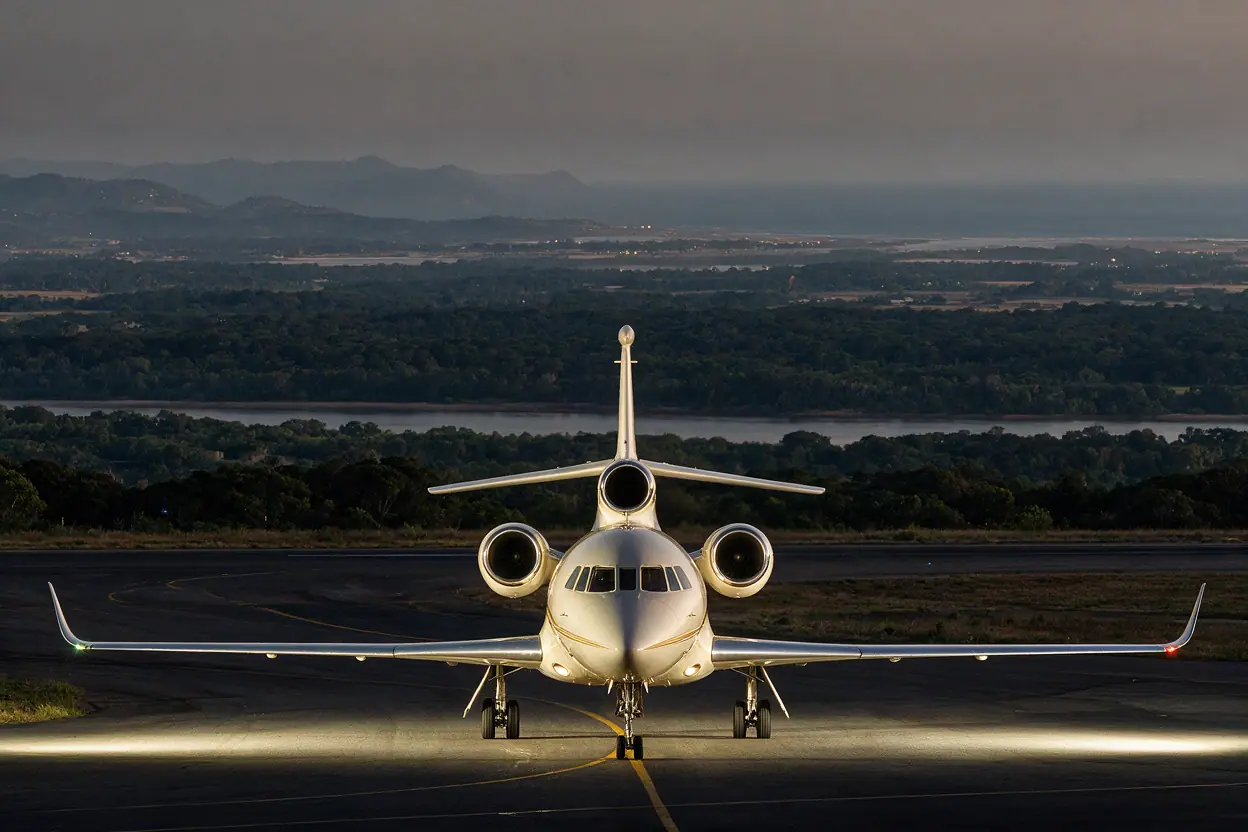
Heavy jet
- 10-14 seats
- 470 kt cruise
- 4,000 nm range
Dassault Falcon 900LX, Gulfstream G450
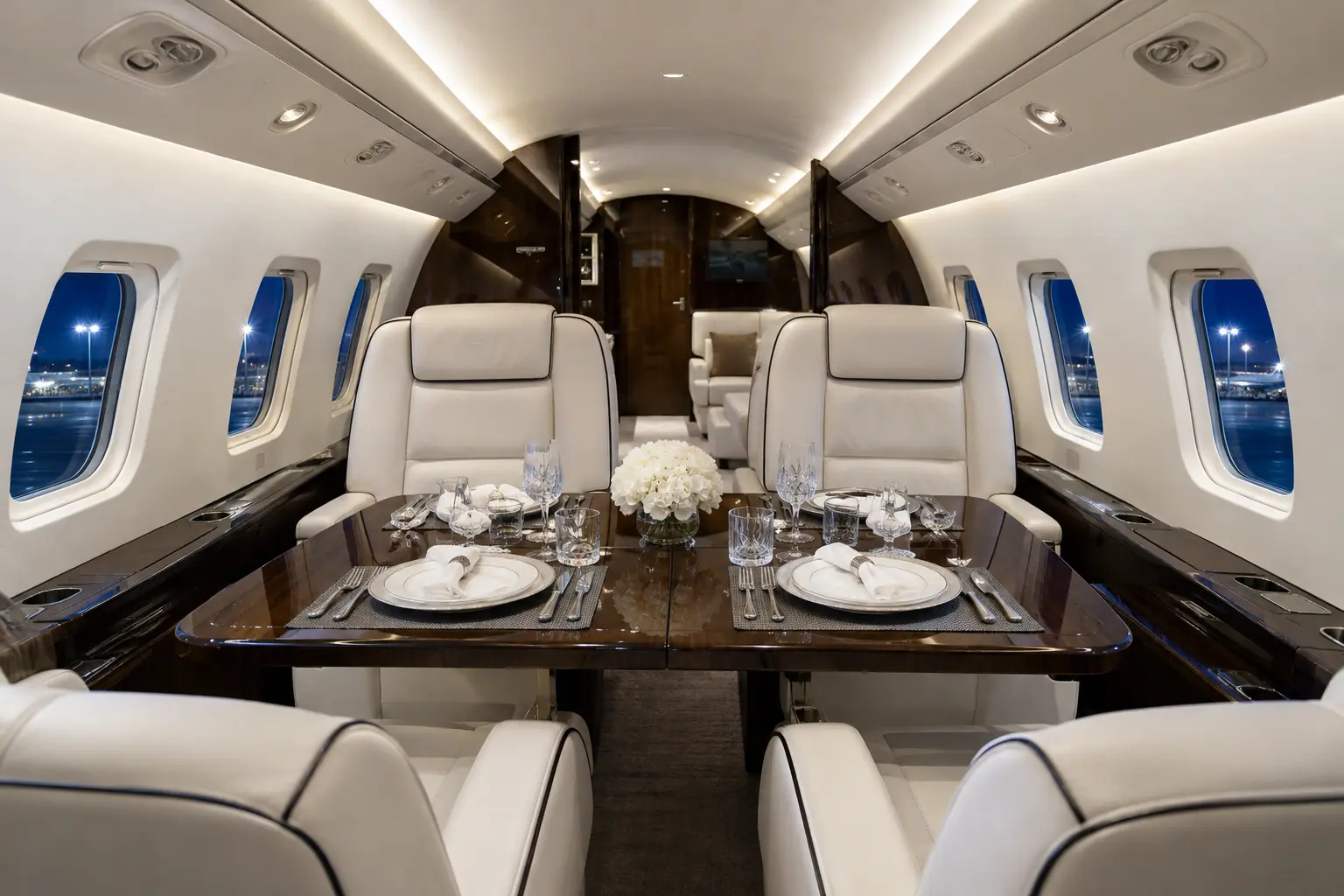
Private jet cost by aircraft class
The main driver of private jet cost is the aircraft class you charter, and hourly rates run from about $2,200 for a turboprop to $14,500 for a heavy jet. Light jets sit in the $3,800 to $5,800 range, midsize jets at $5,200 to $7,800, and super-midsize at $7,200 to $10,000. A turboprop at $2,200 an hour carries six to eight passengers at roughly 300 knots. Those are hourly figures; a flight quote also includes landing and handling fees, crew and fuel surcharges. Ask for an all-in number before you compare.
Route pricing gives a clearer picture. New York to Miami on a light jet is about 949 nautical miles and 2 hours 37 minutes, estimated at $10,000 to $15,000. Los Angeles to Las Vegas is 199 nautical miles and 47 minutes, $4,000 to $6,000. A midsize jet at $5,200 an hour costs more per flight than a light jet, but it carries seven to nine passengers and flies further. For short hops, the fixed costs of landing and handling matter more than hourly rate.
| Class | Seats | Hourly estimate | New York → Miami |
|---|---|---|---|
| Turboprop | 6-8 | $2,200–$3,500 | $8,000–$12,500 |
| Light jet | 4-7 | $3,800–$5,800 | $10,000–$15,000 |
| Midsize jet | 7-9 | $5,200–$7,800 | $13,500–$20,000 |
| Super-midsize jet | 8-10 | $7,200–$10,000 | $17,500–$24,000 |
| Heavy jet | 10-14 | $9,500–$14,500 | $23,000–$35,000 |
Heat and seasons that affect cost
Density altitude is the number that quietly changes private jet cost in summer. At Denver's Centennial Airport (5,885 feet elevation), July density altitude averages about 9,000 feet and can reach 9,600 feet at 115F. High density altitude reduces engine and wing performance, so operators may limit passengers or fuel. On a hot day, a light jet that normally flies nonstop may need a fuel stop, adding time and cost. Las Vegas and Phoenix also see peaks above 5,000 feet density altitude.
At Van Nuys, July density altitude averages about 3,200 feet and reaches 3,800 feet at 115F, which matters for light jets departing to the East Coast. If you are flying from a high-elevation airport in July, ask the operator for a performance calculation before you commit. The same number can change the aircraft you need.
Seasonal demand moves prices too. The data shows wet days peaking at 13 in July, but winter storm season also disrupts schedules. Holiday weeks and major events raise charter rates. If your trip is flexible, midweek departures often cost less than Friday afternoons. A light jet flight from New York to Miami at $10,000 can rise during peak periods; booking two to three weeks ahead helps. All figures are estimates; confirm with your broker.
| Mo. | Avg high | Wet days | KTEB DA | KVNY DA | KOPF DA |
|---|---|---|---|---|---|
| Jan | 40°F | 9 | -1,300 ft | 1,400 ft | 1,100 ft |
| Feb | 43°F | 11 | -1,100 ft | 1,600 ft | 1,300 ft |
| Mar | 49°F | 10 | -700 ft | 1,700 ft | 1,500 ft |
| Apr | 60°F | 12 | 100 ft | 2,100 ft | 1,700 ft |
| May | 70°F | 11 | 700 ft | 2,200 ft | 1,800 ft |
| Jun | 79°F | 11 | 1,300 ft | 2,700 ft | 1,900 ft |
| Jul | 85°F | 13 | 1,700 ft | 3,200 ft | 1,900 ft |
| Aug | 83°F | 12 | 1,600 ft | 3,300 ft | 1,900 ft |
| Sep | 77°F | 10 | 1,200 ft | 3,000 ft | 1,900 ft |
| Oct | 66°F | 9 | 500 ft | 2,700 ft | 1,700 ft |
| Nov | 54°F | 9 | -300 ft | 2,000 ft | 1,400 ft |
| Dec | 45°F | 11 | -900 ft | 1,500 ft | 1,200 ft |
Rain days means days with at least 1 mm of precipitation. Density altitude uses the typical afternoon peak with a rough formula. Operators rely on their own performance figures.

Airports that shape private jet cost
Airport choice affects private jet cost through landing fees, handling fees and fuel prices. Teterboro (KTEB) serves New York with four FBOs and a 6,997-foot runway at just 9 feet elevation. Van Nuys (KVNY) is the Los Angeles business-aviation hub. Miami-Opa Locka (KOPF) handles South Florida and Bahamas departures. These airports often cost more than outlying fields but save ground time. Ask your broker to compare nearby airports on the same trip.
items

Teterboro Airport
- KTEB code
- 6,997 ft runway
- 0 mi to downtown New York
Teterboro Airport sits at 9 feet elevation with a 6,997-foot runway and four FBOs: Jet Aviation, Signature Aviation East, Atlantic Aviation and Signature Aviation West. It is the default New York business-aviation field, about 2,227 miles from the strip. Because Teterboro is busy and slot-controlled, departures can carry premium handling fees. Winter weather and summer thunderstorms both affect schedules. If your trip originates in Manhattan, Teterboro is usually the quickest access point, but compare with White Plains or Newark to see whether the total private jet cost changes.

Van Nuys Airport
- KVNY code
- 8,001 ft runway
- 0 mi to downtown Los Angeles
Van Nuys Airport is 802 feet above sea level with an 8,001-foot runway and FBOs including Signature Aviation (West), Signature Aviation VNY North, Jet Aviation Van Nuys and The Park VNY. It is about 229 miles from the strip. Summer heat pushes density altitude to around 3,800 feet at 115F, which can limit performance on light jets and turboprops. For Los Angeles departures, Van Nuys competes with Hawthorne and Santa Monica; the right choice depends on aircraft type and where you are starting.
Miami-Opa Locka Executive Airport
- KOPF code
- 8,002 ft runway
- 0 mi to downtown Miami
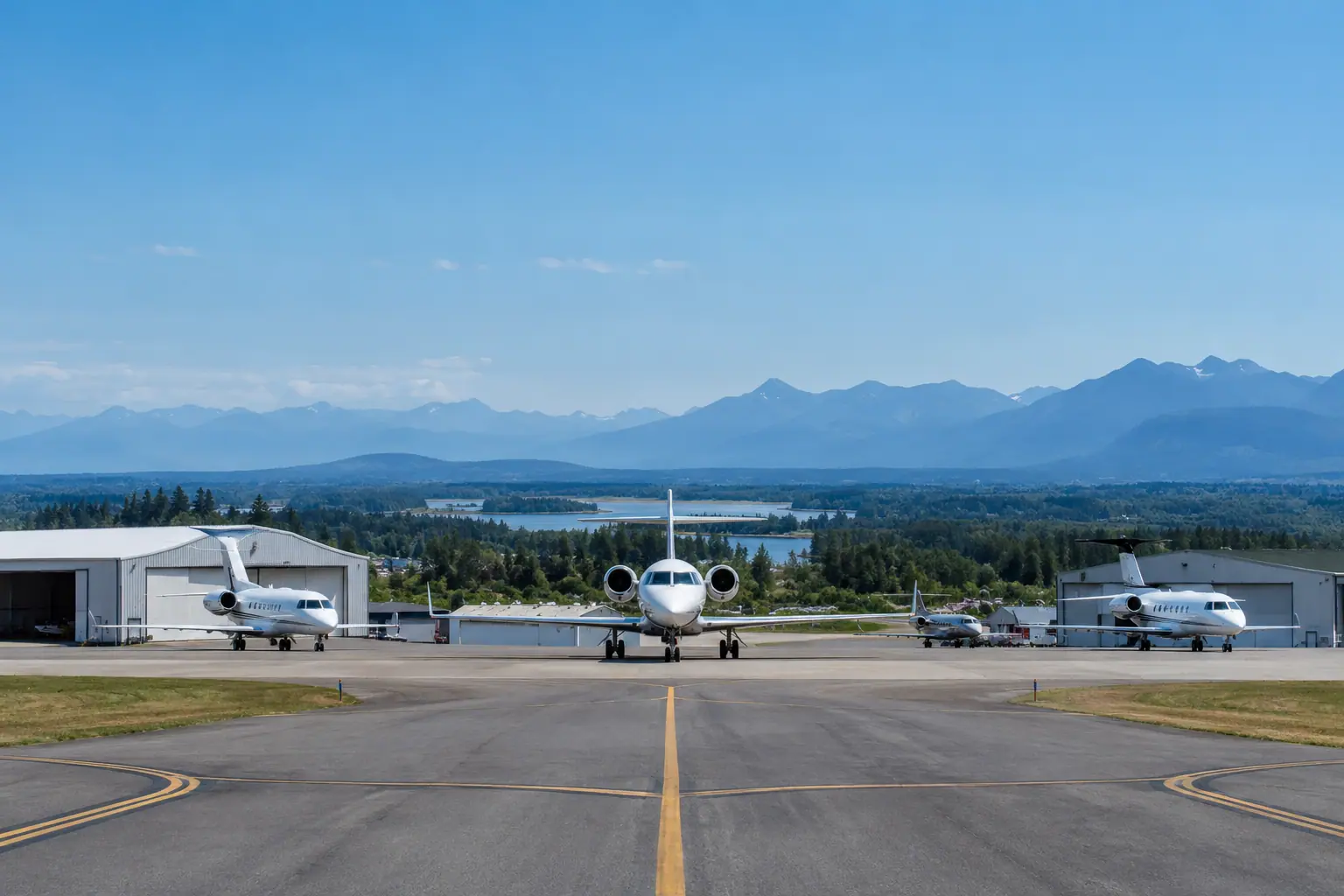
Miami-Opa Locka Executive Airport is 8 feet above sea level with an 8,002-foot runway and four FBOs. It is about 2,170 miles from the strip. South Florida's summer heat raises density altitude to about 2,500 feet, but the bigger scheduling factor is afternoon thunderstorm season from June to September. For Miami and Bahamas trips, Opa Locka often beats Miami International on ground time and handling cost, which lowers the total private jet cost.
Chicago Midway International Airport
- KMDW code
- 6,522 ft runway
- 0 mi to downtown Chicago
Dallas Love Field
- KDAL code
- 8,800 ft runway
- 0 mi to downtown Dallas
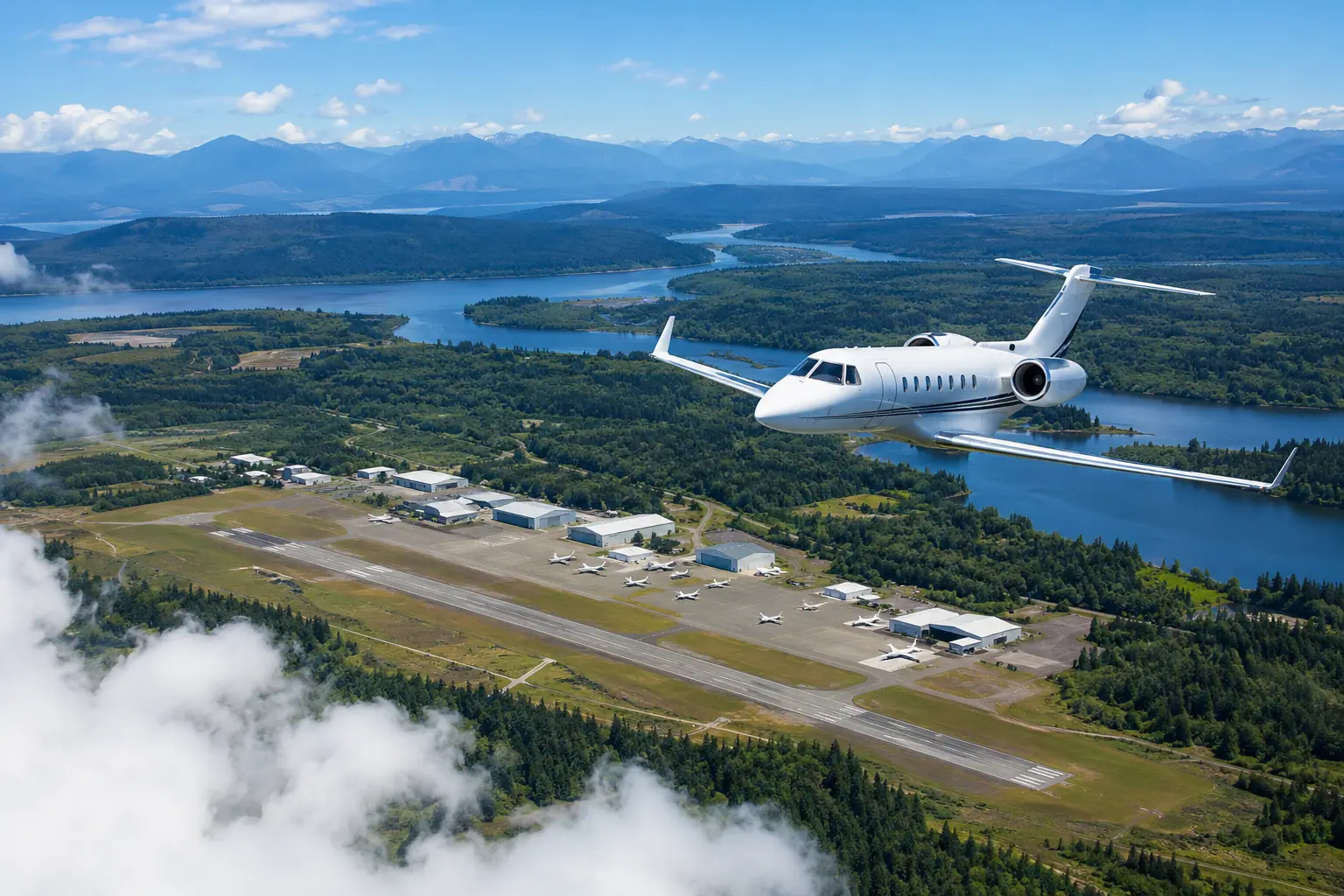
Dallas Love Field sits at 487 feet with an 8,800-foot runway and FBOs including Atlantic Aviation, Jet Aviation, Signature Aviation and Jet Access Dallas. It is 1,066 miles from the strip. Summer heat can push density altitude to around 3,500 feet at 115F. Love Field's central location makes it convenient for Dallas departures, but curfews and noise rules may restrict some operations. Compare with Addison and Dallas Executive when you price a flight.

William P. Hobby Airport
- KHOU code
- 7,602 ft runway
- 0 mi to downtown Houston
How to get a useful cost estimate
Define the trip
Give your broker the route, dates, passenger count and luggage. These four details determine the aircraft class and the hourly rate that applies.
Compare classes
Ask for quotes in two classes, such as light and midsize, so you can see how private jet cost changes with range and cabin size. Check whether a fuel stop is needed.
Confirm all-in pricing
Ask for landing fees, handling, crew and fuel surcharges in writing. The hourly rate is only part of the total, especially on short flights with minimum charges.
Verify operators and documents
Charter flights are arranged through FAA Part 135 operators who hold operational control. For international trips, confirm CBP arrangements. Your broker should disclose the operator before you book.
Top questions
How much does a private jet cost per hour?
Hourly rates run from about $2,200 for a turboprop to $14,500 for a heavy jet. Light jets are $3,800 to $5,800, midsize $5,200 to $7,800, and super-midsize $7,200 to $10,000. These are estimates before landing and handling fees. The class you need depends on passenger count and range, so a short trip in a light jet often costs less per hour than a long trip in a heavy jet.
What is the private jet cost from New York to Miami?
A light jet on New York to Miami is about 949 nautical miles and 2 hours 37 minutes, estimated at $10,000 to $15,000. That is for the aircraft, not per passenger. Prices rise during peak weeks and when weather requires alternate airports. Ask your broker for an all-in quote that includes landing and handling fees at both ends.
Is a turboprop cheaper than a light jet?
Yes, on an hourly basis. Turboprops run about $2,200 to $3,500 an hour, while light jets are $3,800 to $5,800. A turboprop cruises near 300 knots and carries six to eight passengers up to roughly 1,500 nautical miles. For short routes under 300 nautical miles, the difference in total cost may be small once fixed fees are included.
How does density altitude affect private jet cost?
At high-elevation airports like Centennial near Denver, July density altitude averages about 9,000 feet and reaches 9,600 feet at 115F. High density altitude reduces aircraft performance, so operators may limit passengers or fuel, or require a fuel stop. That can add time and cost. For hot-weather departures from high airports, ask for a performance check before you book.
Do prices include landing and handling fees?
Usually not in the hourly rate. Landing fees, handling, crew and fuel surcharges are quoted separately or built into an all-in price. On short flights, these fixed costs can be a large share of the total, which is why a 47-minute Los Angeles to Las Vegas flight is estimated at $4,000 to $6,000 even though the hourly rate is lower. Always ask for the all-in figure.
Who operates the aircraft and who is responsible?
Charter flights are flown by FAA Part 135 operators, who hold operational control of each flight. Brokers arrange the trip as agents under DOT Part 295 and do not operate aircraft. For international legs, CBP handles clearance. Ask your broker to name the operator and confirm its certificate before you pay a deposit.